
Raytron Technical Review RESEARCH ARTICLE WP-01-14
镍包铜与纯镍对比:高温Applications
NCC vs Pure Nickel: High-Temperature Applications
收稿: 2025年12月 接受: 2026年2月 发布: 2026年3月
DOI: 10.1234/raytron.2026.WP-01-14
1. 引言
2. 材料概述
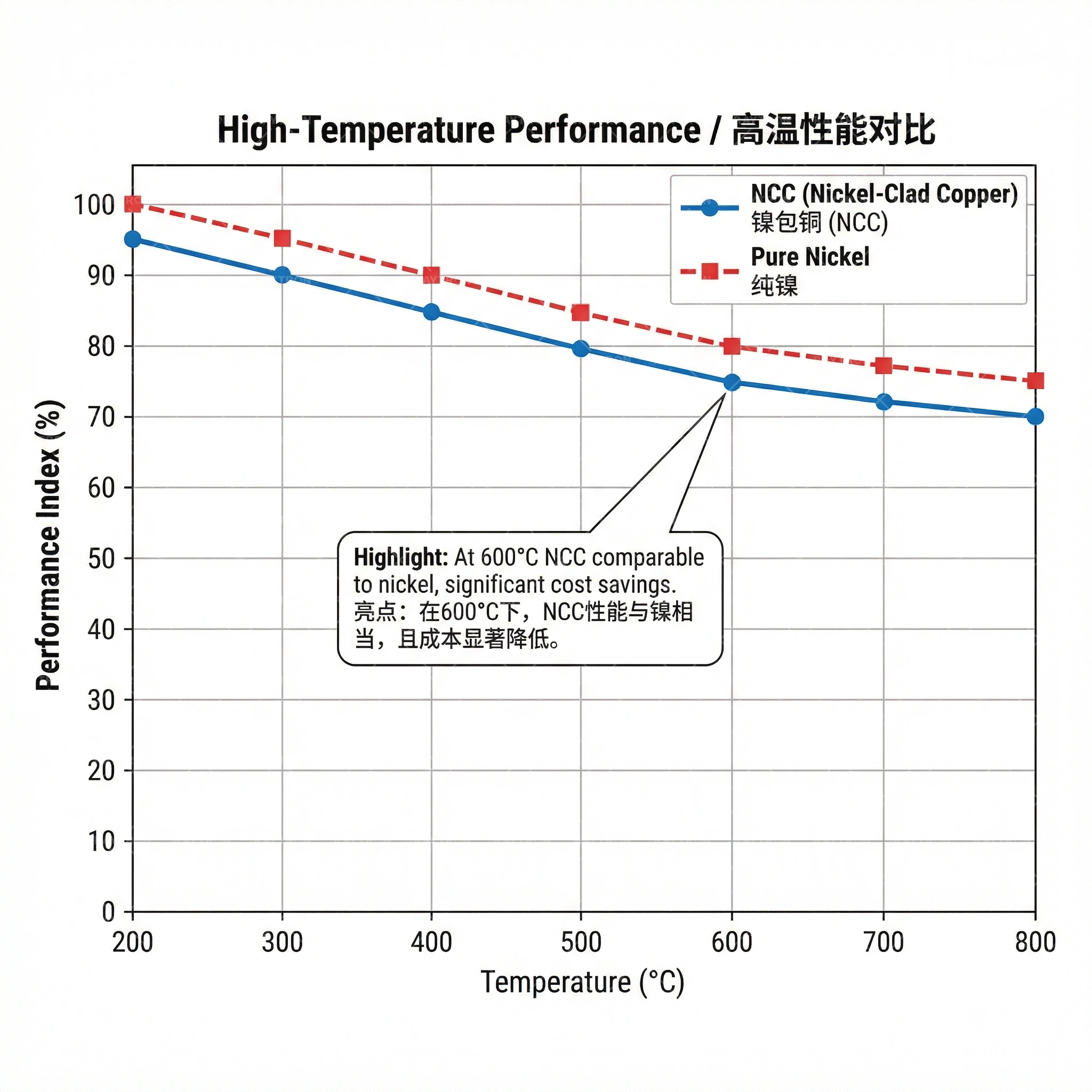
3. 高温性能
4. Anti-oxidation性
5. 机械性能
6. 电气性能
NCC的Conductivity远高于纯镍,在需要高电流的Applications中具有优势。
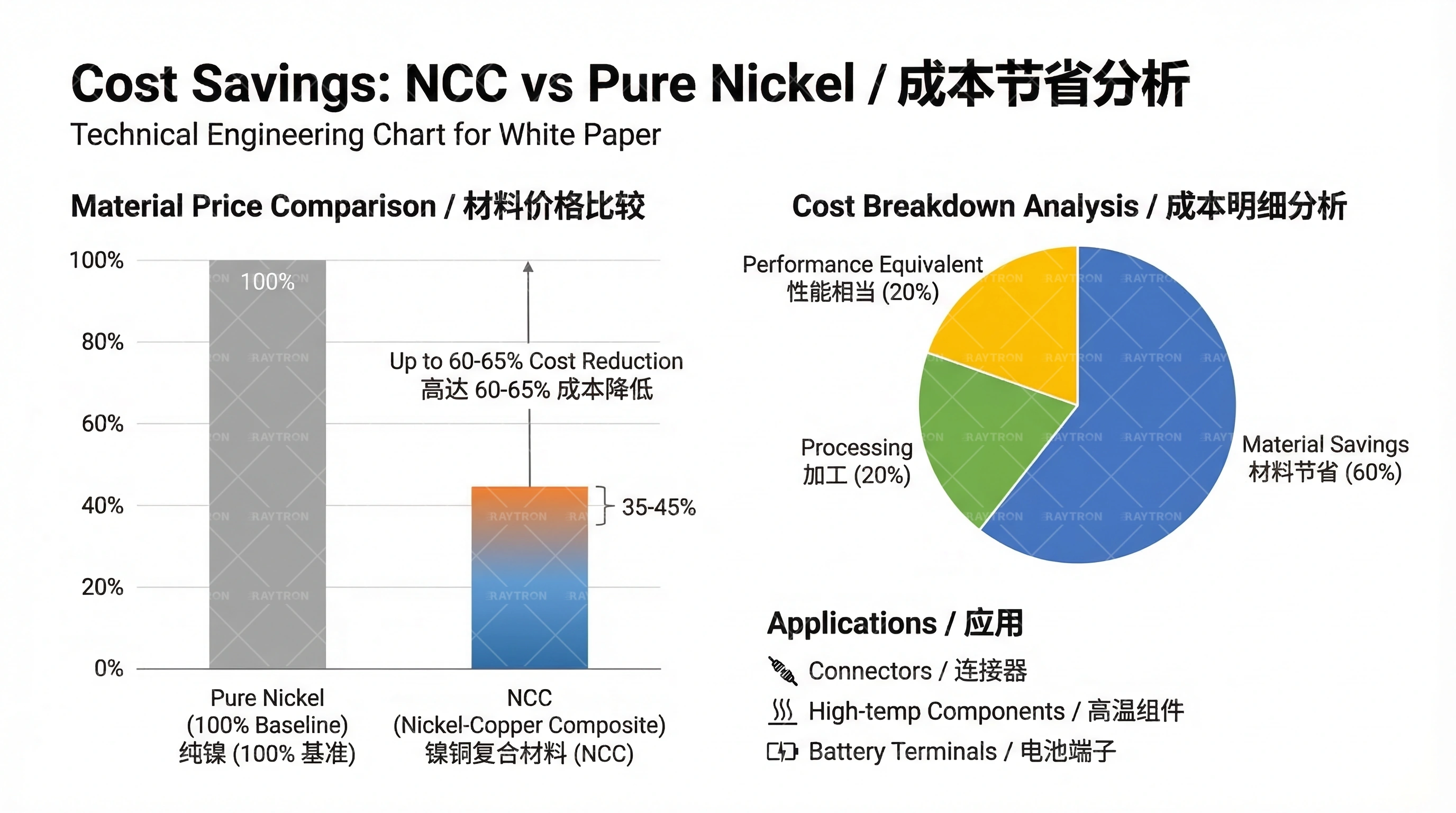
7. 成本分析
NCC在保持性能的同时提供Cost Savings。
8. 结论
NCC在400°C以下Applications中是纯镍的优秀替代品,提供更高的Conductivity和更低的成本。
FAQ
什么是镍包铜(NCC)?
NCC是一种双金属导体,具有铜芯和镍外层,通过包覆工艺制造。它结合了铜的高Conductivity和镍的Anti-oxidation性和高温能力。
NCC与纯镍的温度限制是什么?
NCC适合连续工作高达400-450°C,间歇使用高达500°C。纯镍可以连续工作在600°C,间歇使用800°C。对于450°C以上的Applications,应考虑纯镍。
为什么在高温Applications中选择NCC而非纯镍?
NCC提供显著更高的Conductivity(85% IACS vs 23% IACS),更低的成本(节省20-30%),适用于400°C以下的大多数高温Applications。更高的Conductivity允许在载流Applications中使用更小的导体尺寸。
NCC适合汽车引擎舱Applications吗?
是的,NCC非常适合汽车引擎舱Applications,温度通常在150-300°C范围内。其高Conductivity、Anti-oxidation性和Cost Effective的组合使其成为发动机舱布线和传感器的理想选择。
NCC的可焊性如何?
NCC由于其镍Surface而具有良好的可焊性,虽然不如纯铜容易。镍包覆层防止底层铜氧化,随时间保持Surface质量以实现可靠连接。
图表
High TemperatureCompare Performance Diagram
OxidationLayerSpecial Propertiesvs Diagram
表格
Table 1 Temperatureetc. Grade
| etc. Grade | TemperatureScope | TypicalApplications |
|---|---|---|
| High Temperature | 150-300°C | Automotive引擎舱 |
| 甚High Temperature | 300-500°C | Aerospace |
| 超High Temperature | 500-800°C | Industrial炉 |
Table 2 High Temperature Property
| Property | NCC | PureNickel |
|---|---|---|
| MostHighContinuous Temperature | 400-450°C | 600°C |
| MostHigh间歇 Temperature | 500°C | 800°C |
| 400°CConductivityRetention | 53% | 65% |
Table 3 ConductivityComparison
| Material | 室Temperature | 400°C |
|---|---|---|
| NCC-85% | 85% IACS | 45% IACS |
| PureNickel | 23% IACS | 15% IACS |
Table 4 CostComparison
| Material | Phase on Cost Index |
|---|---|
| NCC-10% | 0.80 |
| NCC-20% | 1.00 |
| PureNickel | 1.30 |
参考文献
- ASTM B355: Nickel-Coated Copper Wire ASTM (2020)
- Nickel and Nickel Alloys ASM (2020)
